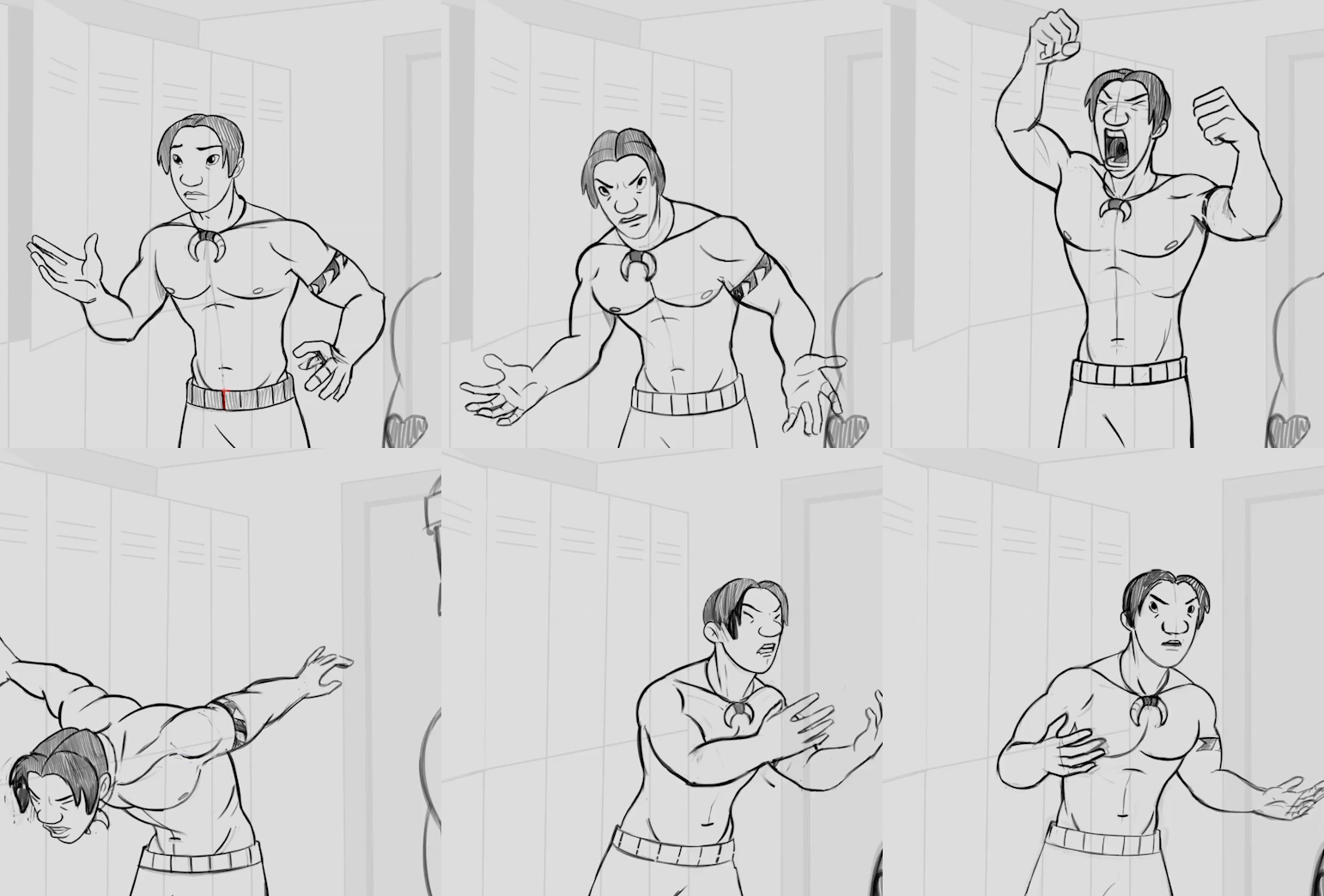



One of the most common questions developing animators ask is:
“What’s the difference between beginner animation and professional animation?”
At first, the answer seems obvious: better drawings, cleaner linework, and more polished rendering. But if that were the whole story, every skilled illustrator would automatically be a strong animator.
Many beginners can create beautiful artwork and still produce animation that feels amateurish. At the same time, experienced animators can bring very simple drawings to life in ways that move with awe-inspiring fluidity. The difference usually comes from understanding the fundamentals behind the movement.
If you’re struggling to see what makes the difference between your work and professional animation, the answer comes down to a combination of skills developed over time. You have to reach a tipping point in your skills where everything comes together to look amazing. The only way to do that is through consistent practice. Professional-quality animation comes from understanding and applying the mechanics of motion, pacing in timing, line consistency, clarity of movement, streamlining your workflow, and purposeful decision-making that work together. These skills help movement feel intentional, readable, and convincing to an audience.
Start with Fundamentals
One of the biggest misconceptions in animation education is the idea that strong drawing skills automatically lead to strong animation. Drawing ability is valuable, but animation is its own discipline.
A beautifully rendered character can still feel unconvincing if the timing lacks weight, the poses are unclear, or the movement doesn’t communicate the intended action. Viewers may not always know exactly what is wrong, but they’ll usually sense when something feels off.
Experienced animators understand that polish comes later. Before refining their shots, they focus on creating movement that feels clear and believable. The 12 principles of animation are crucial at every level. Squash and Stretch, Anticipation, Staging, Straight Ahead Action and Pose to Pose, Follow Through and Overlapping Action, Ease In, Ease Out, Timing, Secondary Action, Exaduation, Staging, and Appeal aren’t just beginner concepts that disappear once an artist gains experience. They continue to support every advanced skill that comes afterward.
For aspiring professionals, these fundamentals also affect portfolio quality. Studios and animation leads often look for clear movement, reliable mechanics, readable posing, and consistency when reviewing junior work. Strong fundamentals show that an animator can solve problems, follow production logic, and create shots that support a larger project.
This is why foundational training is so important. Before animators tackle complex acting scenes or dynamic action shots, they need to understand the principles that make movement work in the first place. That is a major focus of our Traditional 2D Animation Basics Course, where students build the core skills that support long-term growth as animators.
Consistency is one of the clearest signs of professional control. When animation feels amateur, inconsistency is often part of the problem. This can be seen in how:
- Character proportions shift unexpectedly.
- Volume drifts over time.
- Motion speeds change from shot to shot.
- Weight feels inconsistent from one pose to the next.
Professional animators work to reduce these issues because consistency creates believability in there work. Whether a project is realistic or highly stylized, audiences need to understand the physical and visual rules of the world they’re watching. When those rules stay stable, viewers stay focused on the performance. When they break, attention shifts away from the story and toward the mistake.
Professionals minimize this by monitoring character volume, weight distribution, silhouette clarity, spacing, and shot continuity throughout the process. The more controlled these elements become, the more polished and consistent the animation feels.
Mechanics Make Movement Believable

Another major difference between beginner and professional animation is the animator’s understanding of mechanics of motion.
Many students naturally focus on style first. They want their animation to look exciting, expressive, or visually impressive. Style matters, but strong mechanics of motion are what give movement credibility. Without them, even appealing designs can feel disconnected from weight, force, and balance.
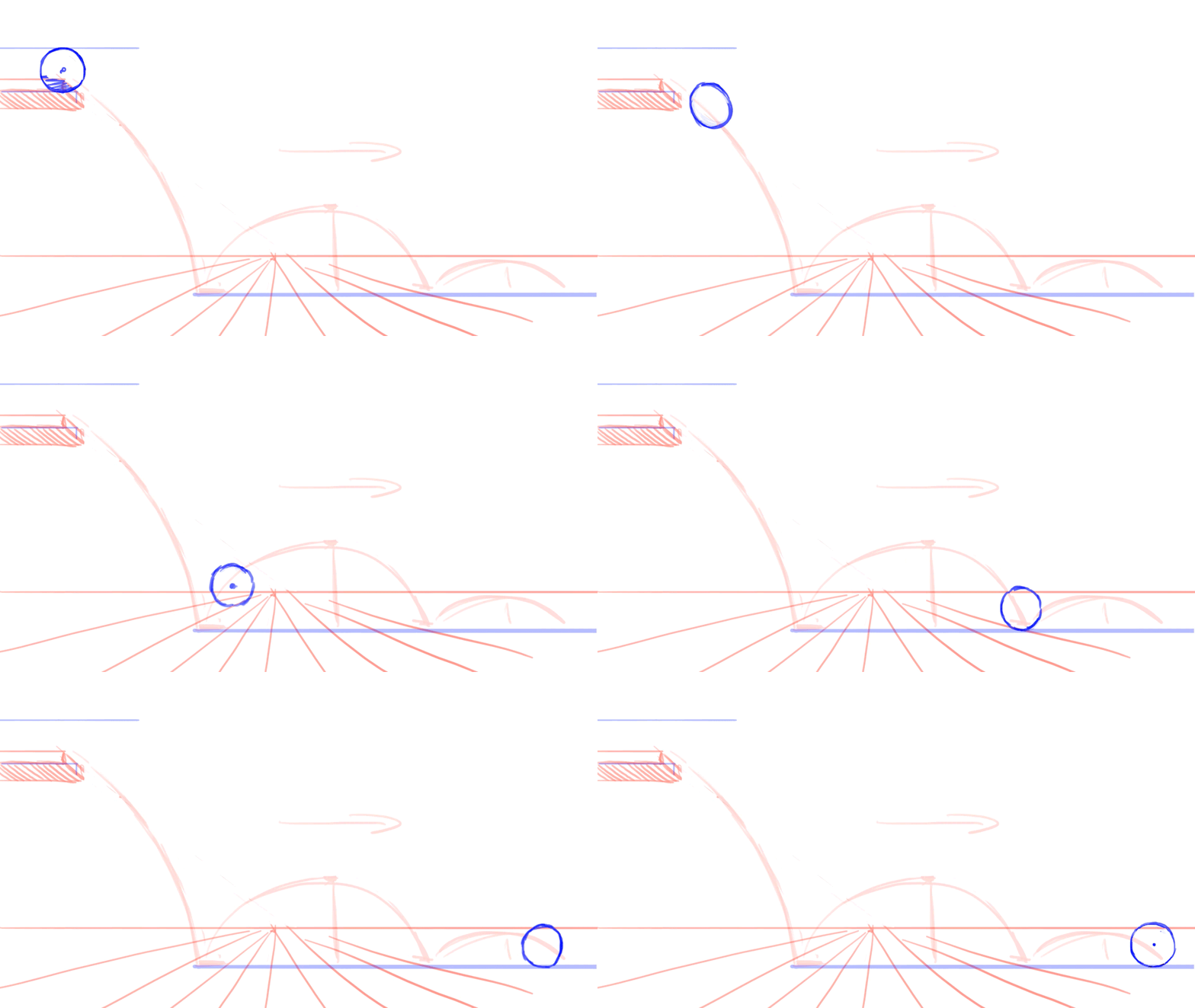
Mechanis of motion is the the basic laws of physics that grounds the characters or objects movement in the world around them. This includes Inertia, mass times acceleration, Action & Reaction, and the pull of gravity. Although these laws do get bent for stylization need for the scene they are still very prevalent throughout the animation.
When a character runs, jumps, lifts an object, or changes direction, the audience expects to feel the physical logic behind the action. If weight, momentum, or reaction are missing, the movement can feel unanchored or artificial, even when the drawings are strong.
Professional animators constantly consider questions like:
- Where is the character’s volume moving?
- What force is driving the action?
- How does momentum affect the movement?
- What physical reaction should happen next?
These questions apply to realistic animation and cartoon animation alike. Stylization works best when it exaggerates believable motion rather than replacing it entirely.
This is why exercises such as walk cycles, runs, jumps, lifting actions, and balance studies remain central to professional training. They teach animators how movement works before asking them to push, exaggerate, or stylize it.
Inside our Mechanics of Motion in Traditional 2D Animation course, students develop these skills through structured assignments focused on weight, force, timing, and believable movement. The goal is to create animation that looks polished and feels production-ready.
Timing and Clarity Separate Good Animation from Great Animation

If mechanics help movement feel believable, timing shapes how the audience experiences that movement. Every hold, acceleration, pause, and spacing choice affects how a scene reads. This is one of the clearest differences between beginner and professional work.
Beginners often animate actions at relatively even speeds, which can make movement feel weightless, mechanical, or confusing. Experienced animators use contrast. They know when to hold longer and when to move quickly or slow down so the audience can absorb an important moment.
A simple head turn can feel confident, nervous, aggressive, hesitant, or thoughtful depending almost entirely on timing. The audience reads thoughts, emotions, and intentions through the motions on the screen.
Timing becomes even stronger when paired with clear posing. Professional animation guides the viewer’s attention so the audience understands where to look, what the character is doing, and why the action matters.
This clarity comes from strong staging, readable silhouettes, thoughtful composition, and poses that communicate ideas quickly. Experienced animators often spend more time refining key poses than beginners expect because strong keys solve many problems before the in-between animation begins. When you have a clear foundation, the rest of the shot becomes easier to build.
This focus on performance and communication is a major part of our Acting Course, where students learn how posing and timing work together to create stronger performances. In professional work, movement should support the idea of the shot rather than compete with it.
Professional Animators Think Like Problem Solvers
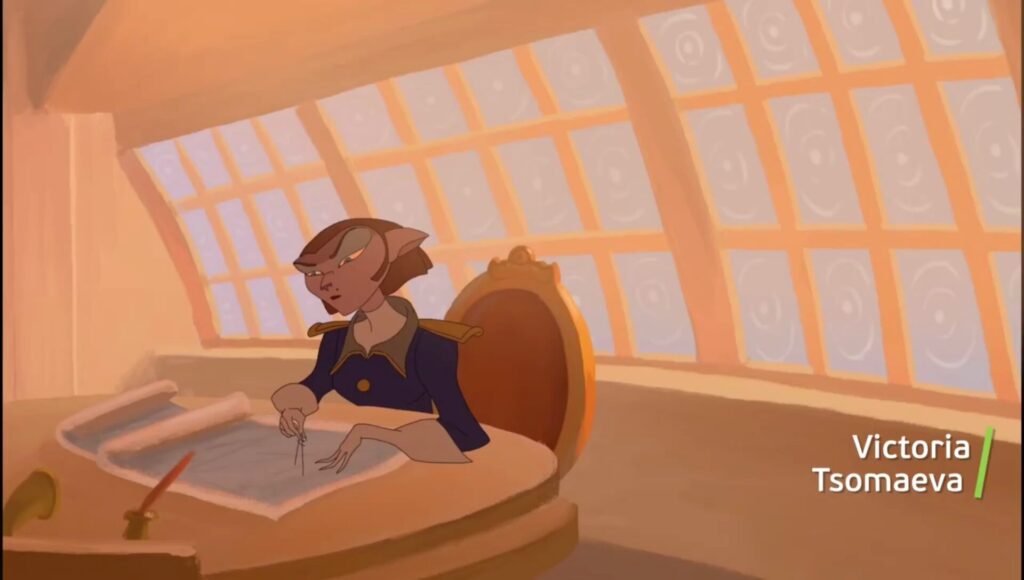
One part of professional animation that students often overlook is the process.
Many beginners want to jump directly into animating. Professionals usually take a more structured approach. Reference gathering, thumbnails, key poses, timing passes, breakdowns, cleanup, and polish all help solve problems before they become expensive or time-consuming.
These steps support better creative decisions.
A structured workflow helps animators work faster, maintain consistency, and improve the quality of their choices throughout production. It also reflects how studio environments operate, where artists must communicate clearly, respond to feedback, make detailed changes, and keep shots moving through the pipeline.
Reference is a useful example. Professional animators often film themselves, study live-action footage, analyze performances, and observe real-world mechanics. This gives animators stronger information to build from.
This mindset extends beyond individual shots. Studios aren’t only looking for artists who can draw well. They want animators who can solve problems, follow direction, communicate clearly, and produce reliable work within deadlines.
Professional animators often prioritize clarity before complexity. A beginner may try to impress a studio with complicated camera moves or overly ambitious shots. A stronger approach is to make sure the core idea works first. Clear animation demonstrates control, judgment, and production awareness.
Building Studio-Ready Animation Skills

When people ask what makes animation feel professional, they’re often looking for an advanced trick or hidden technique. In reality, professional animation is built through consistent practice and the study of motion.
The artists who improve the fastest usually strengthen skills such as:
- Mechanics of Motion
- Timing
- Clarity
- Consistency
- Observation
- Communication
- Production workflow
These skills are the building blocks of professional work and the foundation of stronger portfolio pieces.
At Animation Club School, our learning path is designed to develop these abilities step by step. Students begin by building strong foundations in the Traditional 2D Animation Basics Course before progressing into more advanced studies of mechanics of movement and acting.
Each stage builds on the one before it, helping students create work that becomes clearer, more intentional, and more aligned with industry expectations.
Learning how to make animation look professional means learning how to make movement feel believable and easy to understand. These are the same qualities that help an animator’s work feel stronger in a portfolio, demo reel, or production environment. Building these skills takes focused practice, structured training, feedback, and guidance from experienced professionals.