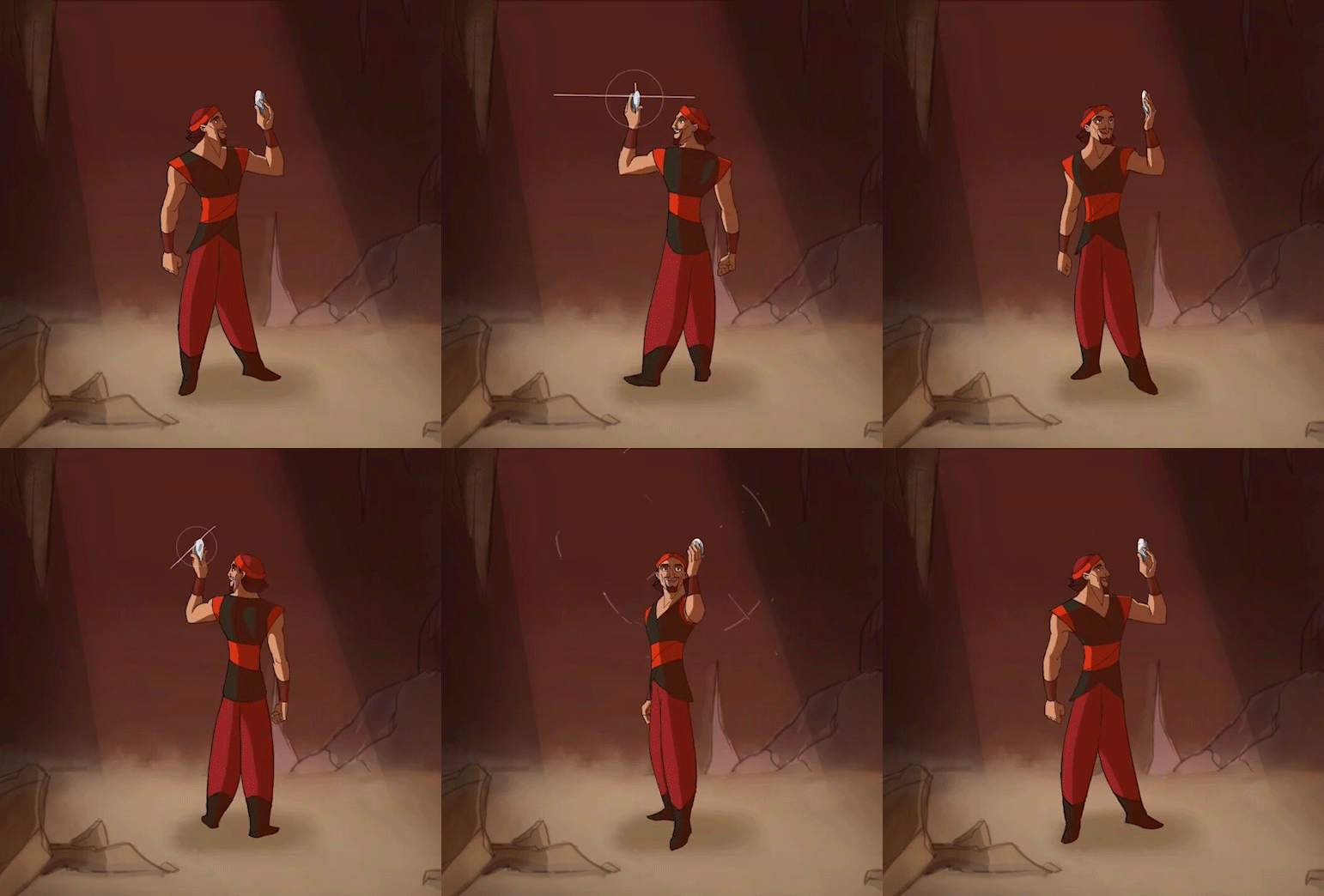

Imagine you’re sitting in a portfolio review. The reviewer finishes watching one of your shots and asks you, “Why did you animate it this way?”
You know the answer. You spent hours refining the timing and adjusting the poses to improve the performance. The challenge is explaining why you did it.
You’ll face questions like this in portfolio reviews, interviews, mentorship sessions, and studio critiques. In every case, people want to understand how you think.
Many animators answer by describing the action.
“The character walks over, picks up the box, turns around, and sets it down.”
While that’s accurate, it doesn’t explain the creative decisions behind the shot. Instead, try something like this:
“I wanted the box to feel heavy, so I slowed the character before the lift and added anticipation. That gave the audience time to understand the effort before the action started.”
The second answer changes the conversation. Instead of describing what happened, you explain why you made those choices.
That ability is just as important to your career as the animation itself.
The good news is that explaining your work doesn’t have to be a talent you’re born with. Like animation, it’s a skill you can practice. Once you learn how to talk about your creative decisions, you’ll have more productive critiques and more confidence when opportunities arise.
In this article, you’ll learn a simple framework for explaining any animation shot. You’ll also discover how clear communication can help you contribute to a team and prepare for studio work.
Know Why You Made Each Choice
When you animate a shot, you’re making dozens of creative decisions. Each choice shapes how the audience experiences the performance.
The best animators don’t make decisions because a textbook says they should. They make decisions to solve problems. Instead of asking, “Which animation principle should I use?” they ask, “What does this shot need?”
Rather than treating animation principles like a checklist, use them as tools to communicate more clearly:
- Anticipation prepares the audience for an action.
- Timing controls energy and emotion.
- Staging guides the viewer’s eye.
- Exaggeration reinforces an idea without losing believability.
Every principle exists for a reason. Once you understand why you made each decision, explaining your work becomes much easier.
How to Explain Animation Decisions with Confidence

The next time someone asks about one of your animations, you don’t need to memorize the “right” answer. Instead, walk them through your thought process.
Start by answering these four questions:
- What was your goal?
- What challenge did you face?
- What decisions did you make?
- What changed?
This framework mirrors the way professional animators approach production. Every shot starts with a clear goal, then goes through revisions that strengthen the story and performance.
More importantly, it keeps the conversation focused on solving problems instead of simply describing what happens on screen.
Explain Why the Change Mattered
Imagine you’re presenting a shot during a portfolio review.
A reviewer asks why you changed the timing before a character jumps.
You could answer:
“I added anticipation before the jump.”
There’s nothing wrong with that response, but it doesn’t tell the reviewer much about your thinking.
Now compare it to this:
“The jump felt too sudden, so I added anticipation to help the audience understand that the character was preparing to leap. That extra moment made the action feel more intentional and easier to read.”
Both answers describe the same animation principle. The difference is that the second answer explains why the change mattered.
You can use this approach for almost any creative decision.
- Instead of saying you adjusted the spacing, explain how it improved the sense of weight.
- Instead of saying you changed a pose, explain how it clarified the character’s emotion.
- Instead of saying you exaggerated the movement, explain how it helped the audience understand the action.
- Instead of saying you adjusted the timing, explain how it changed the energy of the performance.
Once you start thinking this way, your critiques become more productive because you’re discussing goals and solutions instead of isolated techniques.
Better Conversations Lead to Better Shots

Animation is rarely a solo effort. Whether you’re working on a student project or a feature film, you’ll spend a lot of time talking about your work with other people.
You’ll discuss ideas with mentors, receive notes from supervisors, work with teammates, and present your work throughout production.
Those conversations become much easier when you can clearly explain your creative decisions.
Strong communication also makes feedback more valuable. Instead of hearing that a shot “feels off,” you can ask focused questions that lead to better solutions.
For example, you might ask:
- Does the emotion read clearly before the dialogue begins?
- Does the movement feel heavy enough?
- Is the audience looking at the right part of the frame?
- Does this pose support the character’s motivation?
Questions like these encourage meaningful discussions and help everyone stay focused on the same creative goal.
Your Portfolio Shows Your Skills, But Your Conversations Show Your Mindset
A great portfolio will always be your strongest asset, but studios are looking for more than polished animation.
They want artists who can think critically, accept feedback, collaborate with others, and understand why a shot works.
That’s why explaining your work is such an important skill. Every conversation gives you an opportunity to demonstrate your problem-solving process and your ability to communicate with a team.
Those qualities are difficult to show in a demo reel alone.
Practice Before Someone Asks

The best time to practice explaining your work isn’t during an interview. It’s while you’re creating your next assignment.
After you finish a shot, spend a few minutes reflecting on your process.
Ask yourself:
- What was I trying to communicate?
- What problem did I need to solve?
- Which decisions helped me solve it?
- What improved because of those changes?
Writing down your answers doesn’t take much time, and it helps you make more intentional creative decisions.
It’s also a great habit to develop while building your portfolio. Each finished assignment becomes another opportunity to practice both your animation and your communication skills.
Want to practice explaining your decisions while building portfolio work? Our animation courses combine guided projects with instructor feedback, so you can strengthen your shots and communicate your choices with confidence.
Keep the Conversation Going

Every animation you create tells a story, but the conversation doesn’t end when you submit your work.
When you can explain your creative decisions, you demonstrate curiosity and problem-solving. Those qualities help you get more from critiques, build stronger professional relationships, contribute more effectively to a team, and prepare for the conversations you’ll have throughout your career.
The next time someone asks, “Why did you animate it this way?” think of it as an opportunity to share your process.
Good animation starts a conversation, but great animators know how to keep that conversation going.
Ready to build stronger portfolio pieces and communicate your creative decisions with confidence? Explore our animation courses and develop the studio-ready skills that help you create, explain, and improve your work.